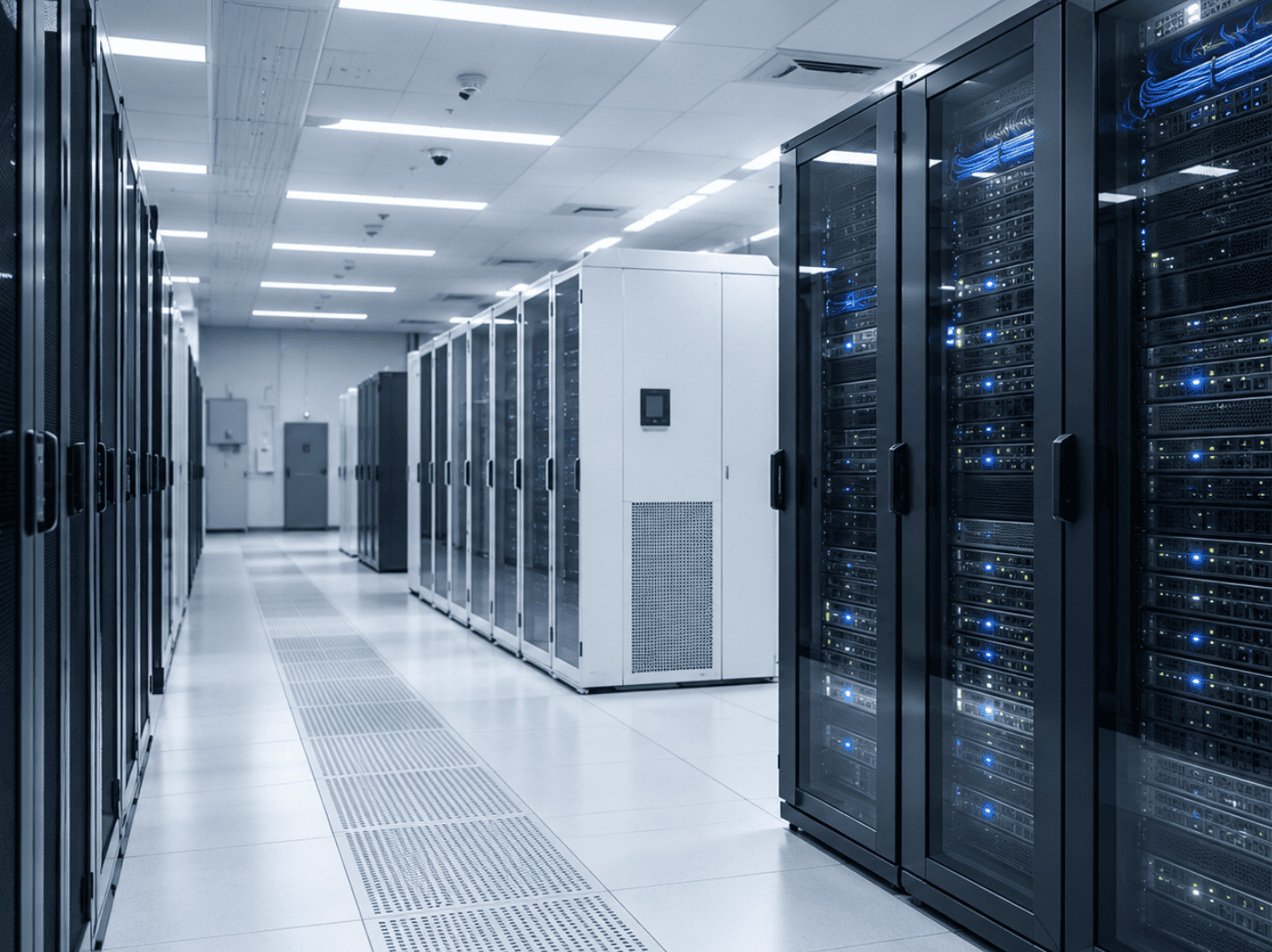
An AI data centre is not simply a traditional data centre with more servers.
As artificial intelligence workloads become more demanding, data centres are being designed around higher power density, larger electrical loads, advanced cooling systems, stronger resilience and increasingly complex connectivity.
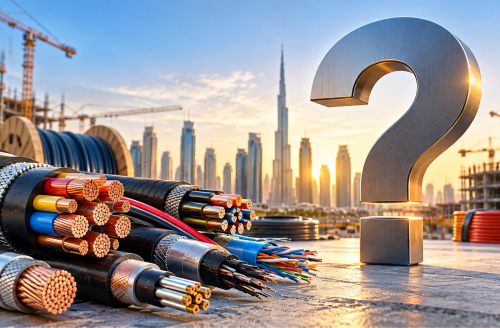
That change is having a direct impact on the electrical infrastructure supporting these facilities — including power cables, fire-performance cables, fibre optic cables, cable cleats, cable glands, cable lugs, conduits and other cable accessories.
For the UAE, this shift is particularly relevant. The country is investing heavily in AI and digital infrastructure. G42 says its Stargate UAE programme includes a 1-gigawatt AI compute cluster within a broader 5-gigawatt AI infrastructure hub, while Abu Dhabi’s Unified Government Data Centre provides 19 MW of AI-ready capacity.
So what does the growth of AI mean for electrical cable systems?
Let’s look at the key changes.
AI Is Changing the Way Data Centres Consume Power
The biggest change is simple: AI workloads require much more concentrated computing power.
The International Energy Agency reported that global data-centre electricity consumption increased by 17% in 2025, while electricity consumption from AI-focused data centres grew even faster. The IEA also notes that increasing deployment of accelerated servers is pushing data-centre power density higher. IEA
Uptime Institute similarly notes that the power requirements of AI systems are driving higher rack densities, with some future rack configurations requiring 100 kW or more and creating challenges for power delivery systems, including cables and busways. Uptime Intelligence
For cable and electrical-system suppliers, this means the traditional approach of simply specifying cables according to connected load is becoming increasingly dependent on the complete electrical architecture.
-
Higher Power Density Means Greater Attention to Cable Sizing
Traditional data-centre designs already require careful electrical planning. AI infrastructure makes this even more important.
As power density rises, engineers need to consider factors such as:
- Current-carrying capacity
- Voltage drop
- Installation method
- Ambient temperature
- Grouping and spacing
- Cable route
- Thermal conditions
- Future load growth
Cable selection therefore cannot be based only on conductor size.
The cable must be appropriate for the actual operating conditions of the installation.
For large facilities, the electrical distribution system may include multiple stages between the utility connection and the IT load, with power distributed through switchgear, transformers, UPS systems and other equipment.
Every stage creates a requirement for correctly specified and supported cabling.
2. Thermal Performance Becomes More Important
Higher electrical loads mean that heat management becomes an important part of cable-system design.
Cables installed close together can experience different thermal conditions from cables installed individually. Installation method, ambient temperature and grouping can all affect the allowable current-carrying capacity.
This is particularly important in a data-centre environment where cooling systems themselves are major infrastructure loads.
Abu Dhabi’s Unified Government Data Centre, for example, uses redundant power systems and chilled-water cooling as part of its resilient design.
The implication is important:
Power cables should be considered as part of the thermal and electrical system, not as an isolated product.
For projects operating in the UAE, environmental conditions also need to be considered during cable selection and installation.
3. Reliability Is More Than Choosing a Good Cable
Data centres are built around availability and continuity.
A power interruption can affect servers, storage, networking equipment and the services running on them.
As AI becomes more deeply integrated into business and government operations, the importance of resilient infrastructure increases.
UAE facilities are already being designed around redundancy and continuity. Abu Dhabi’s Unified Government Data Centre, for example, incorporates redundant power systems and reports 99.982% uptime.
This puts greater emphasis on the complete cable installation:
Cable → termination → gland → cleat → support → routing → connection
A high-quality cable cannot deliver a reliable installation if the accessories, terminations or support system are unsuitable.
4. Cable Accessories Are Becoming More Important
When discussions turn to data centres, most attention goes to servers, UPS systems, cooling and generators.
But the supporting cable infrastructure is just as important to the physical electrical installation.
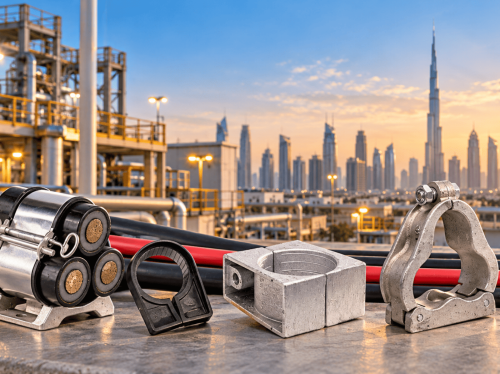
Cable Glands
Cable glands provide the cable-entry interface at electrical equipment and enclosures.
The right gland needs to match the cable, enclosure entry, environment and protection requirements.
Cable Cleats
Cable cleats secure cables and help restrain cable movement.
For power installations, cleat selection can also need to account for the mechanical forces that occur during short-circuit conditions.
Misterlight supplies a range of cable cleats, including aluminium trefoil cleats and multicleat systems designed for different cable arrangements.
Cable Lugs and Terminals
Correct cable termination is essential for creating reliable electrical connections.
The lug or terminal needs to be compatible with the conductor, connection equipment and project specification.
Conduits and Cable Protection
Where cables require additional mechanical protection or controlled routing, conduit systems and associated accessories can form part of the installation.
Misterlight’s UAE portfolio includes GI conduit and accessories alongside cable glands, cable cleats, cable lugs and other electrical accessories.
5. Fibre Optic Cabling Is Critical to AI Infrastructure
AI data centres don’t only need power.
They also need high-speed connectivity.
Servers, storage systems and networking equipment exchange enormous amounts of data, making high-performance communications infrastructure essential.
This is where fibre optic cables become important.
Fibre optic cables are used for high-speed data transmission and networking applications. Misterlight’s fibre-optic portfolio includes singlemode and multimode fibre constructions for telecommunications, data transmission, LAN, process control and safety/supervisory systems.
This means that the cable infrastructure of an AI data centre can broadly be viewed as two interconnected systems:
Power infrastructure
Power cables, flexible cables, fire-performance cables, cable glands, cleats, lugs, conduits and related accessories.
Data infrastructure
Fibre optic cables, data cables, control cables and related connectivity systems.
The performance of both networks matters.
6. Fire Performance Remains a Critical Consideration
Higher power density and increasing infrastructure complexity also make fire protection and circuit continuity important considerations.
Data-centre electrical systems may include critical circuits associated with emergency systems, fire detection, safety and control.
The appropriate fire-performance cable depends on the application and project specification.
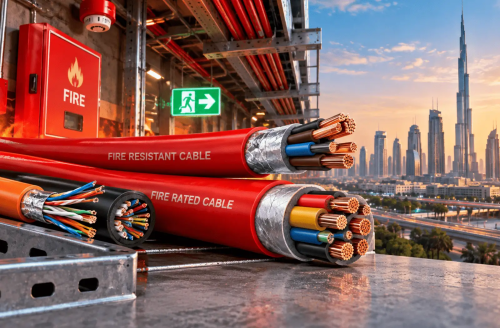
Misterlight’s fire-performance range includes cables associated with fire detection and alarm systems, emergency lighting and other critical applications, with products referencing standards including BS 7629-1, BS 5839, BS EN 50200 and BS 6387.
The key takeaway for project teams is that “fire-rated cable” is not a specification on its own.
The required:
Application → fire test → performance classification → certification → installation method
should all be considered.
7. UAE Projects Add Environmental Considerations
Data centres in the UAE must be designed for the local operating environment.
Depending on the installation, cable systems may encounter:
- High ambient temperatures
- Dust
- Humidity
- Outdoor exposure
- Mechanical stress
- Industrial environments
- Corrosive conditions
This makes cable construction and accessory selection particularly important.
The same cable or accessory may not be suitable for every environment.
Engineers and procurement teams should therefore look at the complete product specification, rather than selecting solely on price or nominal size.
8. Data Centres Need Cable Systems That Can Scale
AI infrastructure is evolving rapidly.
The IEA notes that AI server power density is increasing quickly and that the expansion of data centres is creating bottlenecks across power equipment and infrastructure supply chains. IEA
This creates another consideration for cable procurement:
Future scalability.
A data-centre project may need to accommodate:
- Additional racks
- Higher-density computing
- Additional power distribution
- New networking infrastructure
- Expanded cooling systems
- Future capacity upgrades
Cable routes, containment systems and accessory selection therefore need to be considered with the future development of the facility in mind.
What Does This Mean for Electrical Cable Suppliers?
The growth of AI data centres changes what project teams expect from cable suppliers.
A supplier is no longer simply providing a drum of cable.
For complex infrastructure, buyers may need access to a wider ecosystem:
Power cables
Fire-performance cables
Fibre optic cables
Control and data cables
Cable glands
Cable cleats
Cable lugs and terminals
Conduits
Earthing materials
Other installation accessories
Having these products available through a single electrical supplier can simplify procurement and help project teams coordinate compatible components.
Misterlight’s current UAE portfolio covers a broad selection of these categories, including fire-performance, fibre optic, control and data, instrumentation and flexible cables, as well as cable glands, cleats, lugs, GI conduits and other accessories.
How Should UAE Data-Centre Projects Approach Cable Selection?
Rather than starting with:
“Which cable is the cheapest?”
a better approach is:
- Define the application
Is the cable being used for:
- Main power distribution?
- UPS systems?
- Emergency systems?
- Fire detection?
- Control?
- Data transmission?
- Equipment connections?
- Establish the electrical requirements
Consider voltage, current, load profile, installation method and expected future capacity.
- Assess the environment
Consider temperature, indoor/outdoor location, moisture, dust and other environmental factors.
- Determine fire-performance requirements
Where applicable, establish the required fire-resistance or flame-performance standard and certification.
- Select the cable accessories
The cable is only one part of the installation.
Specify suitable:
Glands + Cleats + Lugs + Conduits + Supports + Terminations
- Verify documentation
For critical infrastructure, technical datasheets, standards, approvals and certifications should be checked against the project specification.
The Future of Data-Centre Cabling in the UAE
The UAE’s data-centre market is moving toward larger, more power-intensive and increasingly AI-focused infrastructure.
Emirates NBD Research projected UAE data-centre capacity to increase from 358 MW to around 950 MW by 2028, while major UAE projects are adding significant AI-ready capacity.
At the same time, Dubai is developing additional large-scale facilities. DEWA reported in January 2026 that the new Moro Hub Green Data Centre in Warsan is planned to have more than 100 MW of capacity.
These developments point to a broader shift:
The future of data-centre infrastructure will require not just more cables, but better-coordinated cable systems.
Power delivery, data connectivity, fire performance, mechanical support and environmental protection increasingly need to be considered together.
Why the Right Electrical Cable Supplier Matters
For data-centre projects, cable selection can affect installation, maintenance, reliability and future expansion.
A specialist electrical cable and accessories supplier can help project teams evaluate products according to:
Application
↓
Electrical requirements
↓
Environmental conditions
↓
Fire & safety requirements
↓
Cable accessories
↓
Standards & certification
↓
Future scalability
Misterlight supplies electrical cables and accessories in the UAE, with a portfolio spanning power-related and specialist cable categories together with cable glands, cleats, lugs, conduits and other accessories.
For projects across the UAE and GCC, this broader product capability can support procurement teams looking for electrical cable and accessory solutions for demanding infrastructure applications.
Frequently Asked Questions
What types of cables are used in data centres?
Data centres can use several cable categories depending on the installation, including power cables, fire-performance cables, control and data cables and fibre optic cables. The exact specification depends on the electrical and communication systems within the facility.
Why are cables important in AI data centres?
AI data centres can have significantly higher power densities than conventional facilities. This increases the importance of appropriate cable sizing, thermal considerations, power distribution, reliability and supporting accessories. IEA
Are fibre optic cables used in AI data centres?
Yes. Fibre optic systems are used for high-speed data transmission and networking within data-centre environments. Misterlight offers fibre optic cable solutions for data transmission and networking applications.
Are fire-resistant cables required in data centres?
The requirement depends on the specific circuit, building design and applicable project standards. Where life-safety or critical systems require circuit continuity during fire, an appropriately tested fire-performance cable may be specified.
Why are cable cleats important in data centres?
Cable cleats help secure and restrain cables. For certain power-cable installations, their mechanical performance under short-circuit conditions is an important consideration.
What cable accessories are required for data-centre projects?
Depending on the installation, accessories can include cable glands, cable cleats, cable lugs, conduits, terminations, supports and earthing components.
Where can I source electrical cables and accessories for data-centre projects in the UAE?
Misterlight supplies a broad range of electrical cables and cable accessories in the UAE, including fibre optic, fire-performance, control and data cables, cable glands, cable cleats, cable lugs and GI conduit systems.
Conclusion
AI is changing data-centre infrastructure from the inside out.
Higher rack power densities, increasing electricity demand, complex cooling systems and high-speed connectivity are changing the requirements placed on electrical and communication cabling.
For UAE projects, the focus is moving beyond simply selecting a cable by size or price. Project teams increasingly need to consider electrical performance, thermal conditions, fire performance, connectivity, mechanical support, environmental exposure and future scalability as part of one complete cable system.
For an electrical cable and accessories supplier like Misterlight, this creates an important role: helping contractors, consultants, engineers and procurement teams source the right combination of cables and cable accessories for increasingly demanding infrastructure projects.
Planning an electrical or data-centre infrastructure project in the UAE or GCC? Talk to Misterlight about your cable and cable-accessory requirements.