Cable Cleat: Types, Applications & How to Choose the Right One
Cable cleats are small but important components in electrical cable installation. They help secure cables in position, maintain organised cable routes and, depending on the design and application, provide mechanical support during demanding electrical conditions.
Choosing the right cable cleat is not simply about finding a cleat that fits around a cable. The cable type, installation arrangement, material, spacing, environmental conditions and project requirements all need to be considered.
For electrical contractors, engineers and procurement teams working on commercial, industrial and infrastructure projects in the UAE, understanding these factors can help ensure a suitable cable support system.
What Is a Cable Cleat?
A cable cleat is a mechanical device used to secure electrical cables and maintain their position along a cable route.
Cable cleats are commonly installed along cable trays, ladders and other support systems. Their purpose is to prevent unwanted cable movement and maintain the intended arrangement of the cables.
For certain power-cable installations, cable cleat selection also needs to account for the mechanical forces that can occur during a short circuit. The cleat therefore needs to be appropriate for the cable arrangement and the forces specified for the installation.
Why Are Cable Cleats Important?
Electrical cables can move due to vibration, installation conditions and electromechanical forces. A suitable cleat helps keep the cable system properly supported and organised.
- Secure Cable Installation
Cable cleats help hold cables in their intended position and reduce unwanted movement along the cable route.
- Improved Cable Management
Properly spaced cleats help maintain consistent cable routing, which can make installations easier to inspect and maintain.
- Support for Power Cable Installations
For power cables, particularly single-core arrangements, electromagnetic forces during a short circuit can be significant. A correctly selected cleating system can help restrain the cables under these conditions.
- Suitable for Different Cable Arrangements
Cable cleats are available in different designs for different cable configurations, sizes and installation requirements.
Misterlight currently offers a dedicated Cable Cleats category within its cable accessories portfolio.
Types of Cable Cleats
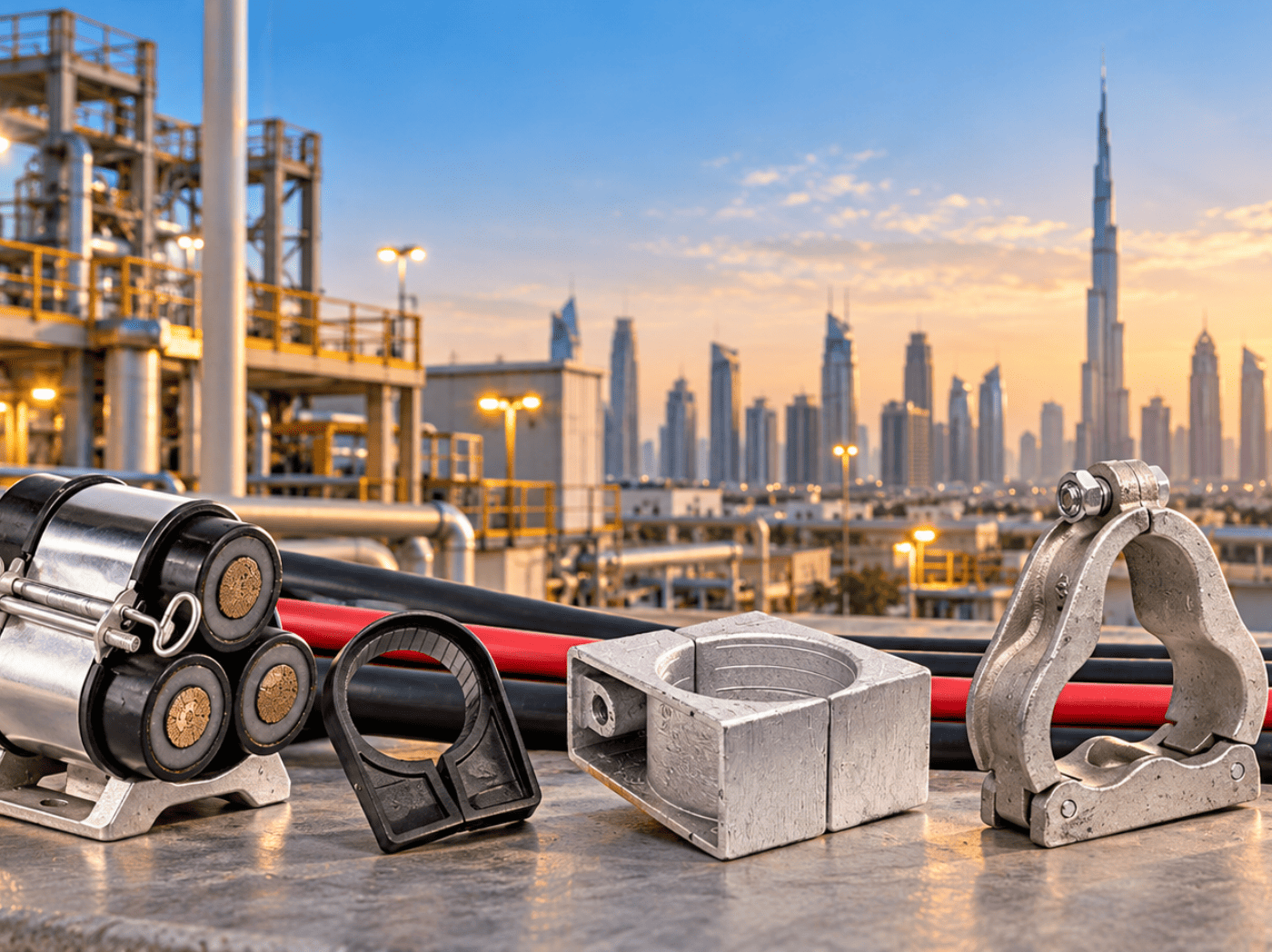
Cable cleats are available in different configurations depending on cable size, arrangement and application.
Single-Core Cable Cleats
Single-core power cables may require specially selected cleats because of the electromagnetic forces that can occur under fault conditions.
The cleating arrangement should therefore be designed according to the cable configuration and project requirements rather than based only on cable diameter.
Multicore Cable Cleats
Multicore cables are typically secured using cleats designed for their particular cable diameter and installation arrangement.
The appropriate cleat size should allow the cable to be securely supported without damaging the cable sheath.
Trefoil Cable Cleats
In a trefoil arrangement, three single-core cables are positioned close together in a triangular configuration.
Trefoil cleats are designed specifically to maintain this arrangement and restrain the cables.
This is particularly relevant in power-distribution installations where single-core cables are installed as a three-phase system.
Multicleats
Some cable-cleat systems are designed to accommodate different cable arrangements or multiple cable sizes.
The appropriate configuration depends on the cable arrangement and project specification.
How Do Cable Cleats Work?
The cable cleat is attached to the support structure while holding the cable or group of cables in position.
The cleat needs to be:
Strong enough → correctly sized → appropriately spaced → compatible with the cable → suitable for the environment
The installation method also matters. A suitable cable cleat cannot compensate for incorrect spacing or an unsuitable support system.
Cable Cleats and Short-Circuit Forces
One of the most important considerations when selecting a cable cleat for power cables is short-circuit withstand.
When a short circuit occurs, electromagnetic forces can cause adjacent conductors to move significantly. The resulting mechanical forces depend on factors including the cable arrangement and electrical fault conditions.
For this reason, cable cleats for certain power installations are selected based on their ability to withstand the expected forces under the specified fault conditions.
This means that simply choosing a cleat because its size matches the cable diameter is not always sufficient.
For engineered installations, the cleat’s tested or specified performance should be checked against the project’s short-circuit requirements.
How to Choose the Right Cable Cleat
Choosing the right cable cleat involves several factors.
- Cable Size
Start with the outside diameter of the cable rather than relying only on the cable’s conductor cross-sectional area.
The cleat should be compatible with the actual cable diameter specified by the manufacturer.
- Cable Arrangement
Determine whether the installation uses:
- Single-core cables
- Multicore cables
- Trefoil arrangements
- Parallel cable runs
- Multiple cable configurations
The arrangement can affect the type and spacing of cleats required.
- Cable Material and Sheath
Consider the cable construction and sheath material when selecting the cleat. The cleat should secure the cable without causing unnecessary pressure or damage to the sheath.
- Short-Circuit Requirements
For power-cable installations, determine the expected short-circuit forces and ensure the selected cleating system is suitable for the project requirements.
This is one of the most important technical considerations when specifying cleats for power distribution.
- Installation Environment
Consider where the cable will be installed:
- Indoor
- Outdoor
- Industrial
- Marine
- Underground
- High-temperature
- Corrosive environments
- Material selection should reflect the environmental conditions.
- Cleat Material
Cable cleats may be manufactured using materials such as aluminium, stainless steel, polymeric materials or other engineered materials.
The best material depends on environmental exposure, cable arrangement, required mechanical performance and project specifications.
- Cleat Spacing
Spacing is also important. Cleats need to be installed at appropriate intervals to provide effective cable support and restraint.
The required spacing depends on the cable type, installation configuration, support arrangement and applicable design requirements.
Metal vs Polymer Cable Cleats
Different materials can be suitable for different environments and applications.
|
Feature |
Metal Cable Cleats |
Polymer Cable Cleats |
|---|---|---|
|
Mechanical strength |
Generally high |
Depends on design |
|
Corrosion considerations |
Material dependent |
Often advantageous in corrosive environments |
|
Weight |
Usually higher |
Usually lower |
|
Application |
Power and industrial installations |
Various cable-support applications |
|
Material selection |
Aluminium/stainless steel and others |
Engineering polymers vary by product |
The correct choice should be based on the complete installation rather than the material alone.
Where Are Cable Cleats Used?
Cable cleats are used across a wide range of electrical and infrastructure installations.
Industrial Facilities
Factories and industrial plants often have extensive cable routes requiring secure and organised cable support.
Commercial Buildings
Large buildings may use cable trays and other support systems where cables need to be routed and restrained.
Power Distribution Systems
Cable cleats are particularly important in power-cable installations where cable movement and short-circuit forces need to be considered.
Infrastructure Projects
Transport, utilities and other infrastructure installations may require robust cable-support arrangements.
Marine and Offshore Environments
Where installations are exposed to challenging environmental conditions, cable-cleat material and design become particularly important.
Misterlight positions its electrical products for applications across sectors including engineering plants, offshore plants, transport, motors, lighting and power-generation systems.
Cable Cleats vs Cable Ties
Cable ties and cable cleats are not interchangeable.
Cable ties can be useful for basic cable organisation and bundling, whereas a cable cleat is specifically designed as a mechanical cable-support and restraint component.
For installations where cables need controlled spacing and mechanical restraint, particularly power-cable installations, the appropriate cable-cleating system should be specified according to the project’s requirements.
Common Mistakes When Choosing Cable Cleats
Choosing Only by Cable Diameter
Cable diameter is important, but it is not the only consideration.
Ignoring Cable Arrangement
A cleat designed for a particular arrangement may not be suitable for another configuration.
Not Considering Short-Circuit Forces
This is particularly important for power cables.
Incorrect Spacing
Even a suitable cleat can perform poorly if installed with inappropriate spacing.
Ignoring the Installation Environment
Outdoor, marine and industrial environments may have very different material requirements.
Mixing Incompatible Components
The cleat, support system and cable installation should be considered as one complete system.
What Should You Check When Buying Cable Cleats in the UAE?
When sourcing cable cleats in UAE, procurement and engineering teams should check:
Cable diameter: Does the cleat fit the actual cable?
Cable configuration: Is it intended for single-core, multicore or trefoil arrangements?
Material: Is the material suitable for the installation environment?
Mechanical requirements: Can it meet the expected forces?
Installation method: Is the cleat compatible with the support system?
Technical documentation: Are the required specifications and certifications available?
Availability: Can the supplier support the required quantity and project schedule?
Misterlight’s UAE operation supplies electrical cables and accessories for commercial, industrial and infrastructure applications and currently lists five products in its Cable Cleats category.
Why Choose a Specialist Cable Cleat Supplier?
Cable cleats are a relatively small component compared with the cable itself, but selecting an unsuitable product can create installation and performance issues.
A specialist supplier should be able to provide clear information on:
- Cable size compatibility
- Available materials
- Cable arrangements
- Technical specifications
- Application suitability
- Installation requirements
- Relevant certification or test information
Misterlight has supplied specialised electrical cables and accessories in the UAE since 1991 and has dedicated categories for cable cleats, cable glands, cable lugs, GI conduit and other cable accessories.
Frequently Asked Questions
What is a cable cleat used for?
A cable cleat is used to secure electrical cables and maintain their position along a cable-support system. For power installations, appropriately selected cleats can also provide mechanical restraint against cable movement.
What is a trefoil cable cleat?
A trefoil cable cleat is designed to secure three single-core cables arranged in a triangular formation, commonly known as a trefoil arrangement.
How do I choose the correct cable cleat size?
Consider the cable’s actual outside diameter, cable arrangement and the cleat manufacturer’s specified size range. For power installations, also consider the required mechanical and short-circuit performance.
Are cable cleats necessary for single-core cables?
The need and type of cleating depend on the installation design. Single-core power cables require particular attention because electromagnetic forces can occur during fault conditions.
What material is best for cable cleats?
There is no single material that is best for every installation. Aluminium, stainless steel, polymeric and other materials can be appropriate depending on the environment and project requirements.
Where can I buy cable cleats in the UAE?
Cable cleats are available from electrical cable and accessories suppliers in the UAE. Misterlight has a dedicated Cable Cleats category within its electrical accessories range.
Conclusion
A cable cleat is an important part of a properly designed cable-support system. The right cleat helps secure cables, maintain cable arrangement and, where required, provide mechanical restraint under demanding electrical conditions.
When choosing cable cleats, look beyond cable diameter. Consider the cable arrangement, material, installation environment, cleat spacing and short-circuit requirements to select a product appropriate for the project.
For electrical projects in the UAE, working with a supplier that understands cables as well as accessories can make product selection and procurement easier.
Looking for cable cleats in the UAE? Explore Misterlight’s cable accessory range or contact our team to discuss your cable-support requirements.