Fire-Rated Cables Explained: Fire-Resistant vs Fire-Rated Cables for UAE Projects
Electrical cables are an essential part of every building and infrastructure project, but in a fire, conventional cables may not provide the level of performance required for critical systems. This is why fire-rated cables and fire-resistant cables are specified for applications where electrical circuits may need to remain operational during a fire.
Emergency lighting, fire detection and alarm systems, evacuation systems and other life-safety installations can depend on cables that are designed and tested for performance under defined fire conditions.
But what exactly is the difference between fire-rated cables and fire-resistant cables? Are they the same? And how do you select the right cable for a project in the UAE?
This guide explains the key differences, common standards, applications and factors to consider when selecting fire-performance cables.
What Are Fire-Rated Cables?
The term fire-rated cable is commonly used to describe cables that have been tested for specific fire-performance characteristics.
However, “fire-rated” is not a single universal performance level. The actual capability of a cable depends on the applicable test standard, test conditions and required duration or performance classification.
For example, different standards evaluate different aspects of cable behaviour during fire, including flame propagation, circuit integrity, smoke emission and corrosive or acidic gas emissions.
Misterlight’s fire-performance cable range includes products manufactured to standards such as BS 7629-1, BS 5839, BS EN 50200, BS 7846, BS 6387 and BS 8434-2, with products including BASEC approval and LPCB certification stated for the range.
Therefore, when specifying fire-rated cables, it is important to look beyond the general label and check the specific standard and performance requirement.
What Are Fire-Resistant Cables?
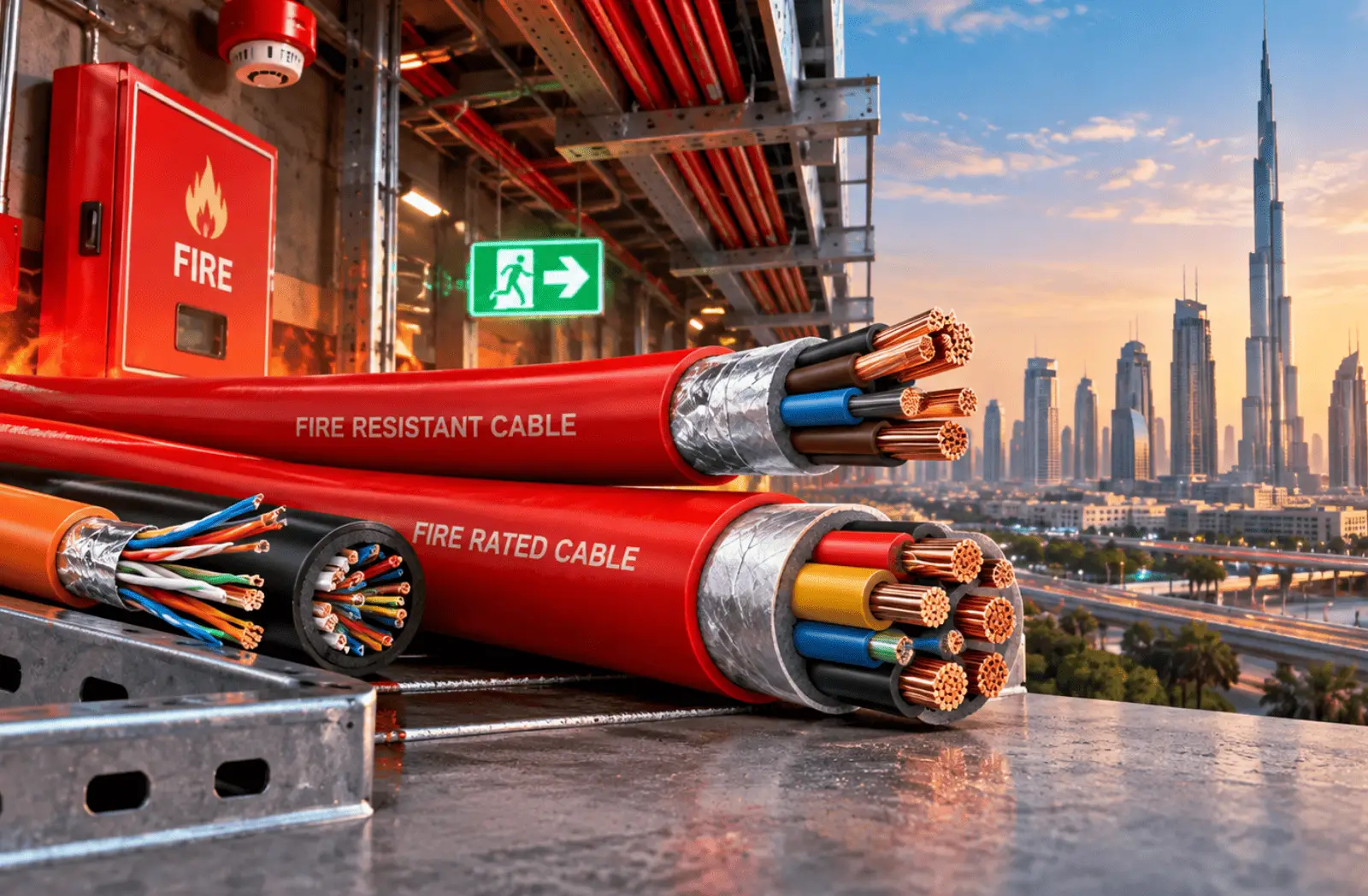
Fire-resistant cables are designed to maintain electrical circuit integrity for a specified period under defined fire-test conditions.
This is particularly important for circuits that need to continue operating during an emergency.
For example, a fire detection system may need to continue communicating with control equipment while a building is being evacuated. Similarly, emergency lighting and other life-safety systems may require continued electrical operation.
Misterlight describes its fire-resistant cables as being intended for critical applications where continuous operation during fire conditions is required.
Fire-Rated vs Fire-Resistant Cables: What’s the Difference?
The terms are sometimes used interchangeably in the market, but the important distinction is what the cable has actually been tested and certified to do.
|
Feature |
Fire-Rated Cables |
Fire-Resistant Cables |
|---|---|---|
|
General meaning |
Broad industry term for cables with specified fire-performance properties |
Cables designed to maintain circuit integrity under specified fire conditions |
|
Fire performance |
Depends on applicable standard |
Defined by the relevant fire-resistance test |
|
Circuit continuity |
May or may not be the primary characteristic |
A key performance characteristic |
|
Application |
Depends on certification and project requirement |
Critical and emergency circuits |
|
Selection |
Based on required fire-performance standard |
Based on required survival time and test classification |
The terminology can vary between manufacturers and projects, so the applicable standard and certification should always take priority over the marketing description.
Why Are Fire-Rated Cables Important?
Fire can damage cable insulation, cause short circuits and interrupt electrical systems. In life-safety installations, losing power or communication during a fire can affect the operation of critical equipment.
Fire-performance cables are therefore used where maintaining electrical system operation or controlling fire-related risks is part of the design requirement.
Common applications include:
Fire Detection and Alarm Systems
Fire-resistant cables can be used in fire detection and alarm systems where circuit integrity is required during fire conditions.
Misterlight’s FIRECEL SR114H, for example, is specified for fire detection and fire alarm applications and references BS 5839-1 in its application information.
Emergency Lighting
Emergency lighting systems need to remain available when normal electrical supplies are interrupted. Where the design requires cable circuit survival during fire, an appropriate fire-resistant cable system can be specified.
Voice Alarm and Emergency Communication Systems
Fire-resistant cables can also be used for voice alarm and emergency communication systems where maintaining communication during a fire is important.
Misterlight’s FIRECEL SR114H product information references BS 5839-8 for voice alarm systems and BS 5839-9 for emergency voice communication systems.
Fire-Fighting and Life-Safety Systems
Certain critical control systems may require cables designed to maintain circuit integrity for a specified period during a fire.
What Do PH30, PH60 and PH120 Mean?
You may see designations such as PH30, PH60 and PH120 when researching fire-resistant cables.
These classifications relate to circuit-integrity performance under the applicable test requirements and indicate different levels of fire survival time.
In simple terms:
PH30 → 30 minutes
PH60 → 60 minutes
PH120 → 120 minutes
However, these designations should not be treated as universally interchangeable across every standard. The complete test standard, installation method and certification should be checked when specifying the cable.
Misterlight lists fire-performance products with BS EN 50200 PH30, PH60 and PH120 performance classifications and also lists BS 6387 and BS 8434-2 requirements for relevant products.
Fire-Resistant vs Flame-Retardant Cables
Another common source of confusion is the difference between fire-resistant and flame-retardant cables.
These are not necessarily the same.
A flame-retardant cable is generally designed to limit or prevent the propagation of flame along the cable under specified test conditions.
A fire-resistant cable, by contrast, is designed to maintain circuit integrity for a specified duration under defined fire-test conditions.
Misterlight makes this distinction on its fire-performance cable range, describing flame-retardant cables as intended to limit fire spread while fire-resistant or fire-rated cables are designed to maintain circuit integrity for a defined period.
This difference is important when selecting cables for life-safety systems.
What Is an LSZH Fire-Resistant Cable?
LSZH stands for Low Smoke Zero Halogen.
In addition to fire performance, LSZH cable constructions are designed to produce reduced smoke and avoid halogenated materials in the relevant cable components.
This can be important in enclosed or occupied environments where smoke and corrosive gases are an additional concern during a fire.
Misterlight’s fire-performance range includes LSZH constructions, and its FIRECEL SR114H product uses an LSZH outer sheath. The product information also references standards covering flame retardance, acid gas emission and smoke density.
LSZH properties and fire-resistance performance are different characteristics, so a cable being LSZH does not by itself establish that it provides a particular fire-resistance rating.
How to Choose the Right Fire-Rated Cable for a UAE Project
Choosing the correct fire rated cable should start with the system requirement rather than simply searching for a cable labelled “fire rated.”
- Identify the Application
First determine what the cable will be powering or controlling.
Is it for:
- Fire alarms?
- Emergency lighting?
- Voice alarms?
- Emergency communication?
- Fire-fighting systems?
- Critical control circuits?
The application will determine the required cable performance.
- Check the Required Fire Survival Time
Some systems may require 30, 60 or 120 minutes of circuit integrity, depending on the design and applicable requirements.
Do not assume that a higher number is automatically required. The required rating should come from the project specification, design engineer and applicable regulations.
- Check the Applicable Standard
Look for the specific standard and classification, not just the phrase “fire resistant.”
Depending on the cable and application, relevant standards may include BS EN 50200, BS 6387, BS 7629-1, BS 8434-2 and others. Misterlight’s fire-performance range references these standards for its relevant products.
- Consider Smoke and Halogen Requirements
For buildings with high occupancy or sensitive equipment, smoke and corrosive gas performance may also be important.
This is where LSZH constructions can be relevant, depending on the project specification.
- Check Installation Requirements
Cable performance can depend on the complete installation system, including supports, fixings, joints and termination methods.
For example, a fire-resistant cable system should be installed using appropriate supporting and jointing methods specified for the application. Misterlight also notes the importance of appropriate support and jointing methods for fire-resistant installations.
Where Are Fire-Rated Cables Used in the UAE?
Fire-performance cables can be relevant across many UAE projects where electrical continuity during fire is part of the system design.
Applications can include:
Commercial buildings
Offices, shopping centres and other commercial facilities may have fire alarms, emergency lighting and emergency communication systems.
Residential and high-rise buildings
High-rise environments may include multiple life-safety systems that require carefully specified electrical cabling.
Hospitals and healthcare facilities
Critical systems can require enhanced electrical and fire-performance considerations.
Hotels and hospitality projects
Fire detection, emergency lighting and evacuation communication systems can require specialised cable solutions.
Industrial facilities
Factories, process plants and other industrial environments can contain critical control and safety systems.
Infrastructure and public facilities
Transport and public infrastructure projects can have specific fire-performance requirements for electrical and communication systems.
The correct cable specification will depend on the project’s design, application, standards and regulatory requirements.
Why Cable Certification Matters
When purchasing fire rated cables in the UAE, buyers should verify the documentation behind the claimed performance.
Look for:
- Applicable test standards
- Performance classification
- Certification or approval information
- Manufacturer technical datasheets
- Cable construction details
- Installation requirements
- Required fire survival duration
This helps ensure that the selected cable matches the actual project specification.
Misterlight’s fire-performance portfolio includes products with stated BASEC approval and LPCB certification, alongside compliance with several British Standards depending on the product.
Why Choose a Specialist Fire-Performance Cable Supplier?
Fire-performance cables are not simply a variation of conventional power cables. Their selection involves understanding the application, fire-test requirements, construction and relevant certifications.
A specialist supplier can help procurement teams and contractors identify products according to:
Application → Cable construction → Required fire performance → Applicable standard → Certification → Installation requirements
Misterlight supplies a range of fire performance cables in the UAE, including fire-resistant cable solutions for applications such as fire detection, alarm systems, emergency lighting and other critical circuits.
Frequently Asked Questions
Are fire-rated and fire-resistant cables the same?
The terms are often used interchangeably in the market, but the actual performance of a cable should be determined from its applicable test standard, classification and certification rather than the name alone.
How long can fire-resistant cables work during a fire?
The required duration depends on the cable’s test classification. Some cables are tested to classifications such as PH30, PH60 or PH120 under applicable standards.
What is the difference between fire-resistant and flame-retardant cables?
Flame-retardant cables are designed to limit flame propagation under specified test conditions. Fire-resistant cables are designed to maintain circuit integrity for a defined period under applicable fire-test conditions.
Are LSZH cables fire-resistant?
LSZH describes the cable’s low-smoke, zero-halogen characteristics; it does not by itself define a particular fire-resistance rating. A cable must be checked against its specific fire-performance standard and classification.
Where are fire-rated cables used?
They can be used in fire alarm systems, emergency lighting, voice alarm systems, emergency communication, fire-fighting systems and other applications where electrical circuit performance during fire is required.
How do I choose fire-rated cables for a UAE project?
Start with the application and project specification, then check the required fire survival time, applicable standards, cable construction, certification and installation requirements.
Conclusion
Fire-rated cables play an important role in electrical systems where maintaining circuit performance during a fire is required. However, choosing the right cable involves more than looking for the words “fire rated” or “fire resistant.”
The key is to understand the application, required survival time, applicable standard, fire-performance classification, cable construction and certification.
For projects in the UAE, working with a specialist cable supplier can help ensure that the selected product matches the technical and project requirements.
Misterlight offers a range of fire-performance cables in the UAE, including fire-resistant solutions designed for critical applications such as fire detection, alarm, emergency lighting and emergency communication systems.
Looking for fire-rated cables in the UAE? Explore Misterlight’s fire-performance cable range or contact our team to discuss your project requirements.